



Table of Contents
- Understanding the Two Approaches to Soft, Breathable Fabrics
- Comparison: Off-the-Shelf Comfort vs Personalised Guidance
- How to Choose Breathable Clothing That Works for Your Body
- Clothing Fit and Fabric Guide: Natural vs Synthetic Materials
- Soft Fabric Clothing for Everyday Wear: Practical Considerations
- Personalised Clothing Customer Service: How It Translates to Better Fit
- Making Your Decision: What Matters Most to You
- Conclusion
- Frequently Asked Questions
Last Updated: October 5, 2026
Understanding the Two Approaches to Soft, Breathable Fabrics
When you're shopping for comfortable versatile clothing personalised service, you face a choice that shapes your entire wardrobe experience: do you prioritise ready-made pieces designed for broad appeal, or do you seek guidance that directs you toward fabrics and fits tailored to your specific body and preferences?
This decision shapes how you spend your time, money, and energy on clothing that actually works for your life.
Off-the-shelf comfortable and versatile clothing offers speed and validated choices from thousands of reviews. Personalised customer service offers direct guidance on fabric performance, fit, and styling tailored to your body, climate, and routine.
Comparison: Off-the-Shelf Comfort vs Personalised Guidance
What Ready-Made Comfortable Clothing Offers
Off-the-shelf comfortable and versatile clothing gives immediate answers: fabric composition on the label, reviews from diverse body types, and quick purchase decisions.
The strength is transparency through volume: hundreds of reviews reveal which pieces pill, shrink, or fade, real-world testing at scale.
Ready-made pieces eliminate decision fatigue and waiting. For busy people who want to get dressed without overthinking, this speed is the entire point.
The trade-off is fit. Most off-the-shelf clothing is designed for average proportions. If yours differ, longer arms, different hip-to-waist ratio, broader shoulders, you're working around the garment rather than with it.
What Personalised Customer Service Delivers
Personalised customer service operates differently: you speak with someone who understands fabric performance at a deeper level.
A good personalised service asks: What's your climate? Do you run hot or cold? What's your typical day? Do you prefer natural fibres or synthetics? How much maintenance are you willing to do?
Those answers inform real recommendations: a cotton-polyester blend for wrinkle resistance, a specific linen weight for your climate, or cuts that account for how size 18 proportions differ from size 8.
This service also means accountability. If a recommendation doesn't work, you return to the person who suggested it, they have a vested interest in making it right.
The cost is time and typically a higher price point, since personalised service is labour-intensive.
How to Choose Breathable Clothing That Works for Your Body
Breathability is the fabric's ability to allow air and moisture to move through it. The right level depends on your climate, activity level, and heat regulation.
In warmer climates, lightweight natural fibres like cotton and linen excel: they're porous, absorb moisture, and feel cool. The trade-off is wrinkles and frequent washing.
In moderate climates, a cotton-polyester blend combines cotton's softness and breathability with polyester's durability and wrinkle resistance, why many versatile everyday pieces use blends.
For all-day comfort, consider weight and drape. Heavier fabrics hold shape but can feel restrictive; lightweight fabrics move with you but may cling. The sweet spot depends on your body and preferences.
Garment cut matters more than fabric alone. Strategic seams, gusseted underarms, and tapered waists make a bigger difference to comfort. A poorly cut cotton top feels worse than a well-designed polyester piece.
Clothing Fit and Fabric Guide: Natural vs Synthetic Materials
Cotton and Linen: Breathability and Durability
Cotton is the standard for breathable comfort: soft, breathable, and gets softer with washing. It absorbs moisture and wicks sweat away rather than trapping it.
The downside is maintenance: pure cotton wrinkles easily, shrinks with careless washing, and can pill. Quality pieces last years; cheap ones wear quickly.
Linen is even more breathable than cotton. It's lighter, dries faster, and has a naturally elegant drape. It also wrinkles, that's not a flaw, it's part of the aesthetic. Linen is ideal if you value breathability above all else and don't mind the relaxed, worn-in look.
Both cotton and linen are natural fibres, which appeals to people who prefer ethically sourced and sustainable materials (Natural fibers in sustainable materials). They're biodegradable, they don't shed microplastics, and they improve with age. The trade-off is durability in high-wear areas and resistance to pilling.
Polyester and Rayon: Performance and Softness
Polyester is synthetic and often misunderstood. It gets a bad reputation for not breathing, but modern polyester blends are genuinely breathable. The Zenana Woven Airflow Collared Short Sleeve Top ($65) is 100% polyester and specifically engineered for airflow.
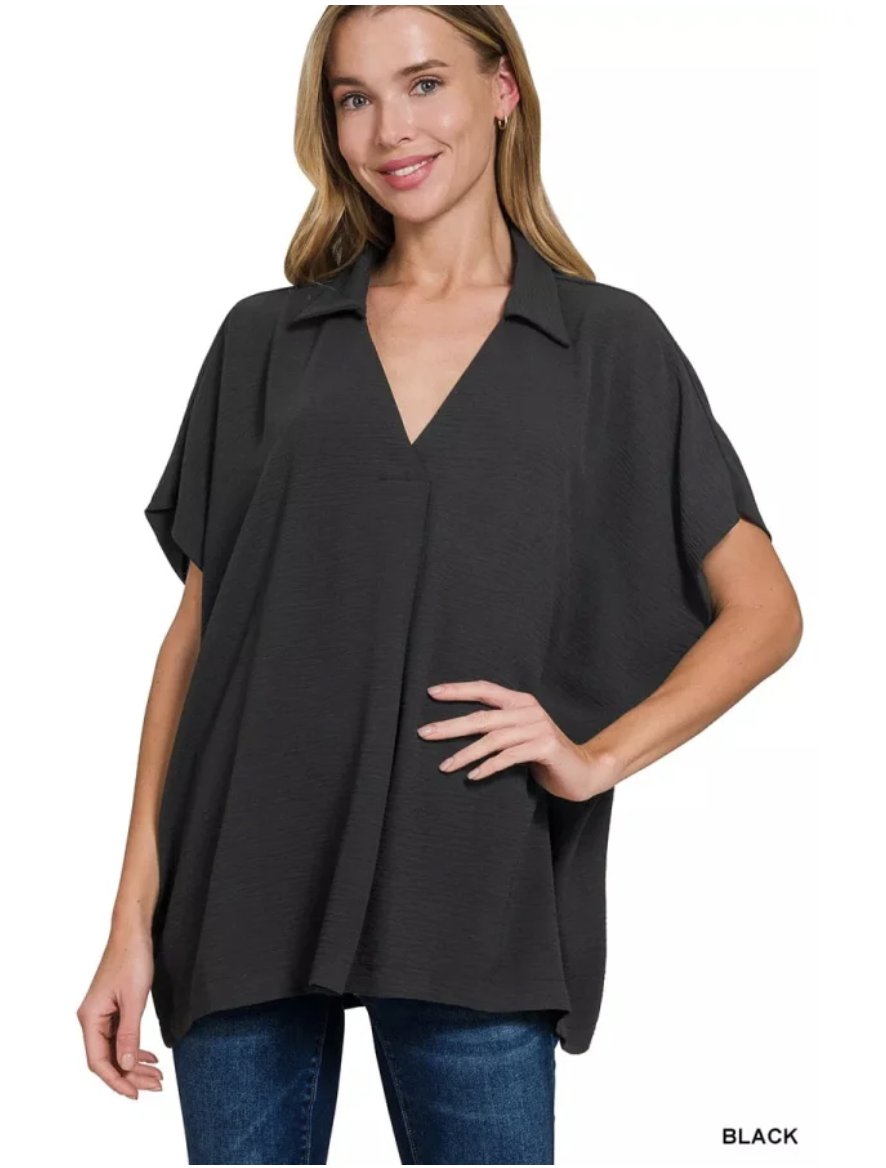
The downside is that pure polyester can feel plasticky and doesn't absorb moisture the way natural fibres do. That's why blends work so well, they get the durability and wrinkle resistance of polyester with the breathability and softness of cotton or linen.
Rayon is a semi-synthetic fibre made from wood pulp. It's buttery soft, drapes beautifully, and breathes well. The Premium Rayon Double Layered Round Neck Tank Top ($47) showcases rayon's luxurious feel. Rayon does wrinkle and requires careful washing, but many people find the softness worth the maintenance.
Rayon blended with spandex (like the tank top above) adds stretch and recovery. This means the garment moves with your body and bounces back to shape, which is crucial for all-day comfort and freedom of movement.
Zenana Woven Airflow Collared Short Sleeve Top →
The choice between natural and synthetic comes down to priorities. Natural fibres prioritise breathability and sustainability; synthetics and blends prioritise durability and ease of care. Neither is objectively better, they solve different problems.
Soft Fabric Clothing for Everyday Wear: Practical Considerations
Soft fabric clothing for everyday wear needs to balance comfort with durability. Softness matters, it reduces skin irritation, feels pleasant against the skin, and makes you want to wear the piece. But softness alone doesn't guarantee longevity.
A fabric can be soft initially and then pill, lose shape, or become rough after washing. This is where personalised guidance helps.
For everyday wear, consider how the piece will be used. A loungewear top needs different properties than workwear. Loungewear can be delicate, you're not moving aggressively, you're not exposed to friction.
The Umgee Full Size Mineral Washed Cotton Gauze Top ($160) is designed for everyday versatility. It's soft, it breathes, and the mineral-washed finish gives it a relaxed, lived-in look. The ruffled and peplum details add visual interest without sacrificing comfort.

Fabric weight also matters for everyday wear. A lightweight fabric is comfortable in warm weather but may feel insubstantial. A medium weight provides coverage and structure while remaining breathable. A heavier fabric offers durability and a more polished appearance.
Personalised Clothing Customer Service: How It Translates to Better Fit
Personalised clothing customer service translates directly to fit that works for your body. This happens through three mechanisms: understanding your proportions, knowing fabric behaviour, and having accountability.
When someone understands your proportions, not just your size number, but your actual body shape, they can recommend cuts that work. A size 18 woman with a pear shape needs different recommendations than a size 18 woman with an apple shape.
Fabric knowledge matters too. A personalised advisor knows that a particular cotton blend stretches differently than pure cotton, that rayon drapes differently depending on weight, that polyester blends hold their shape better through repeated washing.
Accountability creates incentive for good recommendations. If you buy a piece based on personalised guidance and it doesn't work, you can return to that person. They have a reputation stake in making sure you're satisfied.
Research from the Australian Consumer Law emphasises the importance of fit and suitability in retail transactions. Personalised service aligns with this principle, the seller is responsible for ensuring the product suits your needs, not just that it technically exists in your size.
The practical outcome is fewer returns, faster wardrobe building, and pieces that actually get worn rather than sitting unused because they don't fit right.
Making Your Decision: What Matters Most to You
The choice between comfortable and versatile clothing and personalised customer service depends on what you value most in your shopping experience.
Choose off-the-shelf if you prioritise speed, variety, and the ability to see exactly what you're getting before committing. If you enjoy the research process, reading reviews, and making independent decisions, this approach suits you. If your body fits standard proportions and you're not sensitive to fabric choices, off-the-shelf typically works fine.
Choose personalised service if you value guidance, accountability, and clothing that accounts for your specific needs.
Many people use both. They buy basics off-the-shelf and invest in personalised guidance for pieces that matter, work clothing, travel pieces, items they'll wear frequently. This hybrid approach gets you the speed of ready-made for simple decisions and the precision of personalised service for complex ones.
The honest truth is that personalised service requires more engagement from you. You need to communicate what you want, try recommendations, and give feedback. It's not passive. But for people willing to do that work, the results are worth it.
Conclusion
The comparison between comfortable versatile clothing personalised service approaches isn't really about which one is "better", it's about which method matches how you like to shop and what you need from your wardrobe.
At Sandee Rain Boutique, we believe personalised service makes a tangible difference.
If you're ready to invest in clothing that actually fits and feels right, SHOP NOW and experience how personalised guidance transforms your wardrobe. Explore our collection of soft, breathable pieces, from the buttery-soft Zenana Double Gauze Round Neck Folded Short Sleeve Top ($64) to our premium rayon pieces, and discover why our customers give us a 96% positive rating across 813 reviews.

Approach |
Best For |
Key Benefit |
Main Trade-off |
|---|---|---|---|
Off-the-shelf comfortable clothing |
Speed and variety |
Immediate access to validated choices |
Limited customisation for fit |
Personalised customer service |
Fit and guidance |
Recommendations tailored to your body and needs |
Requires more time and typically costs more |
Hybrid (both) |
Most people |
Speed for basics, precision for investment pieces |
Requires deciding which pieces deserve personalised attention |
Frequently Asked Questions
What fabrics are soft and breathable for everyday clothing?
Cotton, linen, rayon, and polyester blends each offer different benefits. Cotton and linen are natural fibres that breathe well and feel soft against the skin, making them ideal for warm weather. Rayon provides a smooth, luxurious feel with good breathability, whilst polyester blends offer durability and moisture management. The best choice depends on your climate, activity level, and how much maintenance you want—cotton and linen require more care, whilst polyester blends are often easier to wash and rewear without pilling.
How can personalised customer service help you choose the right clothing size?
Personalised service goes beyond standard size charts. It can explain how specific fabrics drape and stretch, which matters because a size 12 in one style may fit differently than another. This guidance reduces the risk of ordering something that looks good on the model but doesn't work for your frame, saving time and money on returns.
How can you tell whether clothing will be comfortable before buying it?
Check the fabric composition first—100% cotton or cotton-blend tops generally feel softer and more breathable than pure synthetics. Read product descriptions for details on stretch, weight, and construction (like double-layered or textured fabrics). Customer feedback about softness and durability is valuable, especially comments on how the fabric holds up after washing. If available, ask questions about specific fit details: does it shrink, does it pill, and how does it feel in humid conditions? These details help you avoid purchasing items that feel premium at first but deteriorate quickly.
What makes comfortable, versatile clothing worth the investment?
Versatile pieces work across multiple occasions and seasons, so you wear them more often, which spreads the cost across more uses. Comfortable clothing you actually want to wear—rather than pieces that sit unworn in your wardrobe—delivers real value. Quality soft fabrics that resist pilling and maintain their feel after washing justify higher prices because they last longer. When combined with inclusive sizing and thoughtful design, these pieces become wardrobe foundations that pair with many other items, making your overall wardrobe more flexible and cohesive.


Laisser un commentaire