

Table of Contents
- What Makes Loungewear Ethical in 2026
- How to Identify Ethical Fashion Brands
- Eco-Friendly Fabrics for Everyday Wear
- Organic Cotton Loungewear Sets Worth Buying
- Inclusive Sizing, Fit and Climate Suitability
- Comparing Price, Value and Care Impact
- Building a Lasting Ethical Loungewear Wardrobe
- Frequently Asked Questions
Last Updated: October 10, 2026
What Makes Loungewear Ethical in 2026
Ethical loungewear is clothing made with verified labour standards, lower-impact fibres and a supply chain a brand can actually explain, a set of claims you can check, not a label you trust on faith.
Fast fashion has trained shoppers to read "sustainable" as a mood rather than a promise, and that gap is where greenwashing lives.
This guide gives you the tools to find the best ethical loungewear brands in Australia: what makes loungewear ethical, how to spot greenwashing, which fibres last, and how to compare price against cost per wear.
How to Identify Ethical Fashion Brands
Identifying an ethical fashion brand comes down to three checks: accredited certification, a named supply chain, and specific fibre claims. Ask: Which certifications do you hold? Which factories make your garments? What percentage uses certified organic or recycled fibre? Do you publish a supplier list? Vague answers are the tell, "ethical partners" means nothing; "GOTS-certified cotton from our listed supplier" is verifiable.
Accreditation and Certification to Look For
Third-party certification is the closest thing the industry has to a receipt. The Textile Exchange standards directory explains the major fibre standards in plain terms, and it is worth ten minutes of your time before you buy anything.
Certification |
What It Covers |
Best For |
|---|---|---|
GOTS |
Organic fibre, processing, labour |
Cotton and modal garments |
OEKO-TEX Standard 100 |
Harmful substances in finished textiles |
Anything worn against skin |
Fair Trade Certified |
Worker wages and conditions |
Cut-and-sew factories |
Global Recycled Standard |
Recycled content and chain of custody |
Recycled polyester and blends |
Reading Supply Chain Claims Without the Greenwash
Greenwashing usually hides in adjectives. The Australian Competition and Consumer Commission has been active on this front, and its guidance on environmental and sustainability claims sets out what businesses can and cannot imply about their environmental impact.
Read claims for specificity. "Made with 100% organic cotton" is checkable. "Made responsibly" is not. "Recycled fibres" is a start, but "30% recycled polyester with GRS certification" is evidence.
Two red flags worth memorising. First, a brand that talks about its values but never its factories. Second, a brand that uses one certified product to imply the whole range is certified. Ask which specific items carry the certification.
Eco-Friendly Fabrics for Everyday Wear
The best eco-friendly fabrics are certified organic cotton, TENCEL lyocell, linen and recycled fibres, chosen for purpose. Natural fibres breathe and age well; modal and viscose drape beautifully but need gentle care; recycled polyester is durable but sheds microfibres.
Comparing Fibres on Origin, Processing and Lifespan
The table below compares the fibres you will actually see on loungewear labels across the factors that determine environmental impact and garment lifespan.
Fibre |
Origin |
Processing |
Dyeing |
Typical care |
Expected lifespan |
|---|---|---|---|---|---|
Organic cotton |
GOTS-certified farms |
Mechanical, no synthetic pesticides |
Reactive dyes, lower water |
Machine wash cold, tumble low |
3-5 years with regular wear |
TENCEL lyocell |
Sustainably sourced wood pulp |
Closed-loop solvent spinning |
Fibre-reactive dyes |
Machine wash cold, line dry |
3-4 years |
Linen |
Flax plant |
Mechanical retting, low chemical |
Natural or fibre-reactive |
Machine wash warm, tumble or line |
5-10 years, softens over time |
Modal / viscose |
Wood pulp |
Viscose process, solvent recovery varies |
Fibre-reactive |
Hand wash or gentle cycle |
2-3 years |
Recycled polyester |
Post-consumer PET |
Mechanical or chemical recycling |
Disperse dyes |
Machine wash cold |
4-6 years, sheds microfibres |
Linen outlasts almost everything, making its higher upfront cost cheaper per wear. Modal and viscose are shortest-lived, a comfort choice, not durability. Recycled polyester sheds microfibres, so use a Guppyfriend bag or gentle cycle to reduce waterway impact.
What Certification Actually Confirms
Certification tells you which part of the supply chain has been checked. GOTS covers fibre, processing and labour, the broadest guarantee on cotton or modal. OEKO-TEX Standard 100 tests finished textiles for harmful substances. Global Recycled Standard verifies recycled content. EU Ecolabel limits water and chemical use in processing. A brand needs only the certification that applies to the specific garment, named clearly.
How Each Fibre Feels and Wears
Organic cotton is soft, breathable and gets softer with washing; look for GOTS certification. TENCEL lyocell is cooler, smoother and resists odour, ideal for warm weather. Modal and viscose drape beautifully but are fragile; wash gently. Linen is most breathable and can outlast three cotton sets. Recycled polyester blends add stretch; spandex fails first.
Dyeing and Finishing: The Hidden Impact
Dyeing and finishing account for significant water and chemical use. Ask whether the brand uses low-impact dyes, treats wastewater, and whether finished fabric carries OEKO-TEX Standard 100 certification. Organic cotton can still fail if finishing is careless.
Organic Cotton Loungewear Sets Worth Buying
Among the best ethical loungewear brands in Australia, the strongest organic cotton loungewear is a two-piece set you can wear together or split across outfits, doubling your options.
Our Zenana Premium Cotton Washed Sleeveless Top & Shorts Set is 100% cotton with pockets and a relaxed fit, machine washable cold. The Zenana Cotton Slub Short Sleeve Tee and Pants Set offers full-length coverage with a drawstring waist.

Inclusive Sizing, Fit and Climate Suitability
Inclusive sizing means patterns are graded for real bodies, not scaled from a smaller size. Know how the range is built, where it runs generous or snug, and which pieces suit your climate.
How to Read a Size Range
A brand publishing bust, waist and hip ranges per size usually grades properly. Our Plus Size Round Neck Short Sleeve Two-Piece Loungewear Set runs 0XL to 5XL with a stretch waist designed as its own block, not a scaled version. The stretch waist adjusts rather than digs, crucial for all-day comfort.
Zenana Premium Cotton Washed Sleeveless Top & Shorts Set →
Fit Notes by Silhouette
Fit varies by cut: relaxed sleeveless tops run loose; drawstring pants accommodate a range of waists; wide-leg pants drape without clinging; quilted sets add bulk. If between sizes, size for the waistband, not the bust, that is where discomfort shows first.
Climate and Season Suitability
Climate matters as much as fit, and most roundups ignore it. Loungewear that works in a humid summer is not the same as loungewear for a cold winter, and buying for the wrong season is the fastest way to a set that sits in the drawer.
Warm and humid months. Cotton, linen and lyocell win because they move moisture away from the skin and dry quickly. Loose cuts and sleeveless styles help.
Cooler months. Brushed fabrics and quilted layers hold warmth without weight. Our Zenana Brushed Dty Microfiber Set at $80 and the Zenana Quilted Button Up Lounge Set at $147 cover opposite ends of that range, one for mild evenings and one for genuinely cold ones.
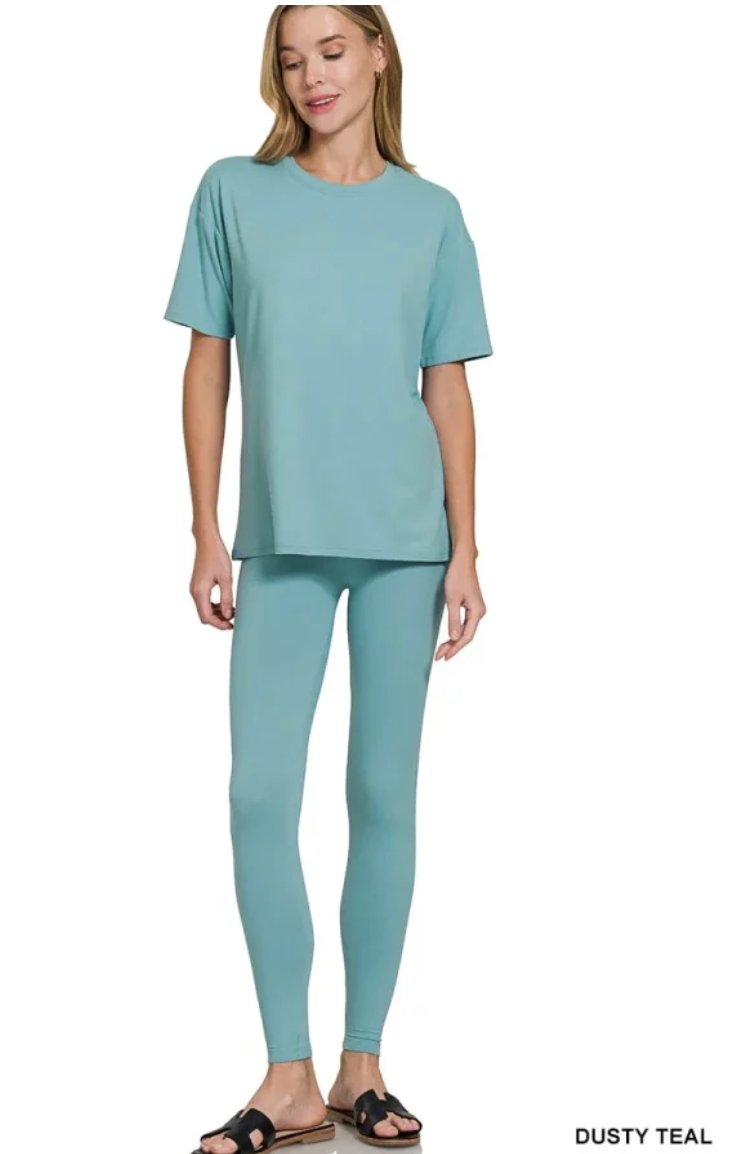

Year-round and transitional. A mid-weight set in a viscose or cotton blend handles the in-between weeks when the temperature swings. The Zenana Cotton Slub Short Sleeve Tee and Pants Set at $138 is the piece we would point to for that role, because the pants can be worn alone on warmer days and the tee layers under a robe when it cools.

Accessibility and Adaptive Considerations
Adaptive loungewear is still a small part of the market, but a few features make a real difference regardless of marketing: a drawstring or elastic waist over a fixed button closure, a pull-on style with no back fastening, and flat rather than raised seams to reduce pressure points for anyone seated or lying down for long periods.
If you need these features, ask the brand directly rather than relying on product photos. A brand that knows its own construction will answer specifically.
Comparing Price, Value and Care Impact
Price per wear beats price per item, every time. A $150 set worn twice a week for two years costs far less per wear than a $40 set that pills after a month.
Set |
Price |
Fabric |
Care |
Best For |
|---|---|---|---|---|
$73 |
Polyester, spandex |
Machine wash cold |
Warm nights |
|
$80 |
Polyester, spandex |
Machine wash cold |
Cooler evenings |
|
$97 |
Poly blend |
Hand wash cold |
Extended sizing |
|
$100 |
Poly, rayon, spandex |
Machine wash cold |
Everyday wear |
|
$111 |
Polyester, spandex |
Machine wash cold |
Year-round |
|
$158 |
Viscose, polyester |
Machine wash cold |
Dressing up |
Care instructions are a value signal. Most of our sets machine wash cold and tumble dry low, surviving a normal laundry week; the plus size set needs hand washing, so factor that in if convenience matters more than the fit range.
Building a Lasting Ethical Loungewear Wardrobe
A lasting wardrobe is built in threes: one warm-weather set, one cool-weather set, and one that can leave the house. Buy for the life you actually live.
Three habits extend the life of anything you buy:
- Wash cold and less often, most loungewear does not need a wash after one wear.
- Air dry where you can; heat breaks down elastic and fades dye.
- Repair before you replace, a loose seam is a five-minute fix.
Buying fewer, better pieces is the most reliable way to cut your wardrobe's environmental impact, and it is cheaper over a two-year window.
Building an ethical loungewear drawer takes patience, because the labels that shout the loudest rarely have the paperwork to back it up. Start with our Zenana Premium Cotton Washed Sleeveless Top & Shorts Set or browse the full loungewear range, and build a wardrobe that earns its place.
Frequently Asked Questions
What fabrics are best for sustainable everyday loungewear?
Organic cotton and cotton slub are the most practical choices for everyday wear because they breathe well and hold up to regular washing. Viscose drapes smoothly and suits warmer days, while French terry adds warmth without bulk. Blends that include a small amount of elastane give stretch for movement. Look for fabrics that keep their softness after repeated washes rather than pilling, since durability is one of the clearest signs of genuinely sustainable loungewear.
How can I tell whether a loungewear brand is ethical?
Check whether the brand names its certifications, such as Fair Trade or Global Organic Textile Standard, rather than relying on vague phrases like 'ethically made'. Look for a published supply chain or transparency report, clear fibre composition on each product page, and care instructions that support longevity. Brands that answer specific questions about labour standards and fibre sourcing are usually more credible than those that only use sustainability language in marketing.
Is organic cotton a good choice for loungewear?
Organic cotton works well for loungewear because it is soft, breathable and comfortable against the skin, which matters for pieces you wear for long stretches at home. It handles machine washing and tumble drying on low settings, so it stays practical for daily use. A 100% cotton set such as a washed sleeveless top and shorts offers a relaxed fit and a soft feel, making it a solid base for an ethical loungewear wardrobe.
What should I check before buying sustainable loungewear?
Confirm the fibre composition, the size range and the care instructions before you buy. Check that the measurements suit your body shape rather than assuming a size label will fit, especially if you have been disappointed by scaled-up plus sizes before. Look at the price against how often you will wear the piece, and favour sets you can wash cold and dry low so they last longer. Transparency about where and how the garment is made is the strongest signal of an ethical purchase.
Do ethical loungewear brands offer inclusive sizing?
Some do, and the details matter more than the label. A brand that lists full bust, waist and hip measurements for each size, and offers options from small through to 5XL, gives you enough information to judge fit before ordering. Look for relaxed and drawstring styles that adapt to body shape rather than relying on stretch alone. If a brand only scales up a straight-size pattern, the larger sizes often sit poorly, so check the stated measurements carefully.


Laisser un commentaire