

Table of Contents
- What Inclusive Sizing Really Means in 2026
- How to Measure Yourself for Clothing (Do This Before You Buy Anything)
- Vanity Sizing and International Size Gaps: Why Your Size Keeps Changing
- Plus Size Fashion Trends 2026: What Is Actually Worth Buying
- Size Inclusive Wardrobe Essentials That Work All Year
- Fit, Proportion and Fabric: What Actually Makes Clothes Comfortable
- Adaptive Design, Ethical Production and the Environment
- Conclusion
- Frequently Asked Questions
Last Updated: September 11, 2026
What Inclusive Sizing Really Means in 2026
Inclusive sizing is the practice of designing, grading and selling garments so that every size in a range fits the body it was made for, rather than simply scaling a smaller pattern up. It sits at the centre of the inclusive sizing fashion guide 2026 conversation because shoppers have stopped accepting token size extensions. Shoppers have stopped accepting token size extensions; a size 18 customer wants a garment cut for her shape, not a size 8 pattern stretched until it technically closes.
That distinction matters more than most brands admit. Size inclusivity is not a size range printed on a label; it is fit testing across the full range, consistent grading, and honest measurement charts. Extended sizing without re-grading produces the familiar problem: shoulders that gape, waists that ride up, and armscyes that cut in.
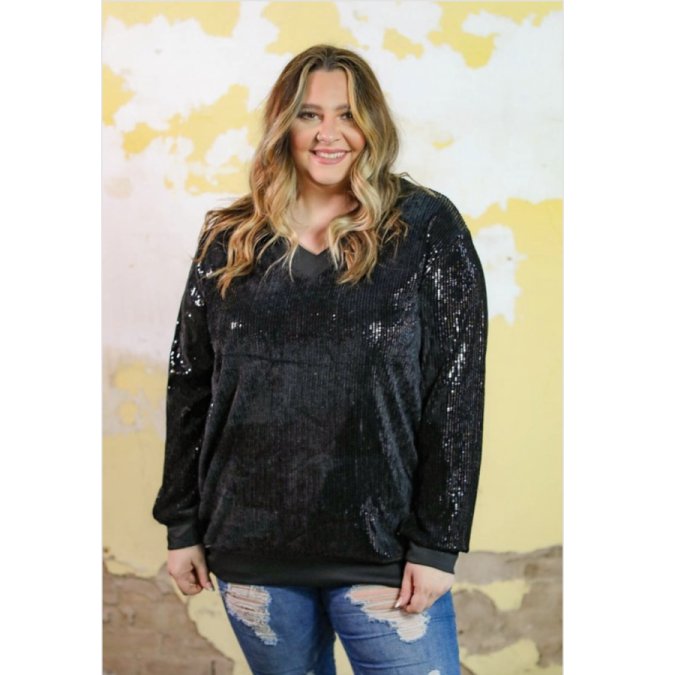
Lucky & Blessed Black Sequin V-Neck Balloon Sleeve Top Plus Size
How to Measure Yourself for Clothing (Do This Before You Buy Anything)
Learning how to measure yourself for clothing takes about ten minutes and saves a decade of returns. Do it once, write the numbers down, and recheck every six months or after any significant weight change. Measure over light clothing or underwear, keep the tape snug but not tight, and stand relaxed rather than sucking in.
The Five Measurements That Decide Your Size
- Bust: around the fullest part, tape level under the arms
- Waist: at your natural crease, usually the narrowest point of the torso
- Hips: around the fullest part, roughly 20cm below the waist
- Inseam: from the crotch seam to the hem of a pair of trousers that fit you well
- Torso length: from the shoulder seam to the crotch, useful for bodysuits and dresses
Reading Size Charts When Every Brand Measures Differently
Size charts describe garment measurements, not body measurements, and the two are not interchangeable. Compare your numbers against the chart's stated body measurements first, then check the finished garment measurements if the brand publishes them. Where a chart lists only one, trust the finished measurements; they tell you how the item will actually sit. A common mistake is sizing to the smallest measurement and hoping the rest stretches.
Vanity Sizing and International Size Gaps: Why Your Size Keeps Changing
Vanity sizing is the practice of labelling a larger garment with a smaller number to flatter the shopper, and it has quietly detached sizing from any shared standard. A size 14 in one label can measure the same as a size 18 in another. The mechanism is straightforward: there is no enforceable body-measurement standard for womenswear in the local market, so each brand sets its own grade rules, and those rules drift over time as fit models change and customer feedback pushes patterns looser.
The result is that the number on the label describes the brand's history, not your body. Two garments both marked 16 can differ by 6cm or more at the waist. That is why the same shopper can be a 12 in one store and a 16 in the next without gaining a centimetre.
Why International Sizes Do Not Convert Cleanly
International systems were built on different logics, so a direct conversion is always approximate. The local women's system is derived from body measurements in centimetres with a 5cm grade between sizes. The UK system uses different base measurements and a 5cm grade but starts from a different anchor point. The EU system is the most consistent because it is built on a defined body-measurement table, but it still assumes a specific height and proportion (europa.eu).
A practical reference for the most common crossover points:
Local |
UK |
US |
EU |
|---|---|---|---|
8 |
8 |
4 |
36 |
10 |
10 |
6 |
38 |
12 |
12 |
8 |
40 |
14 |
14 |
10 |
42 |
16 |
16 |
12 |
44 |
18 |
18 |
14 |
46 |
20 |
20 |
16 |
48 |
22 |
22 |
18 |
50 |
24 |
24 |
20 |
52 |
Treat this as a starting point, not a guarantee. Above a local 18, the conversions widen further because US and UK brands grade differently at the top of their ranges, and some stop grading properly altogether.
The Fix: Ignore the Number, Trust the Tape
The practical fix is to ignore the number entirely. Keep your five measurements in your phone notes and compare them to each brand's chart before ordering. When a chart is missing or vague, that absence is information: it usually signals inconsistent grading across the range.
Three habits make this work:
- Screenshot the size chart for any brand you buy from more than once, and note the date. Charts change without announcement.
- Check the finished garment measurements where published. A waistband listed at 82cm flat will stretch to roughly 88-92cm on a stretch denim, and knowing that stops you sizing up unnecessarily (research on garment fit and material stretch).
- Read the returns policy before the product page. A brand that makes returns difficult is usually a brand that knows its sizing is inconsistent.
Plus Size Fashion Trends 2026: What Is Actually Worth Buying
Plus size fashion trends 2026 are less about novelty than about fit-led design. The strongest direction is tailoring built for curvy silhouettes from the first pattern, not adapted afterwards. Wide-leg and boyfriend denim, high-rise waists and structured knitwear are all worth the spend because they hold their shape and work across seasons.
Trend forecasting is useful only when it survives contact with your wardrobe. A trend that requires a new set of undergarments to work is usually a trend to skip. We favour pieces that layer, travel well, and can be dressed up or down.
Size Inclusive Wardrobe Essentials That Work All Year
Size inclusive wardrobe essentials are the small set of garments that fit consistently, layer without bulk, and survive repeated washing. Build around neutral bottoms, a few well-cut tops, and one layer you can wear indoors and out. Our RISEN Full Size High Rise Crop Wide Leg Jeans Plus Size are a good starting point: a high-rise waist that accentuates curves, a cropped wide leg for movement, and cotton-blend denim with enough stretch for all-day wear.

How to Build a Capsule Wardrobe Around Your Measurements
- Record your five measurements and note them in your phone
- Choose two bottoms in fabrics you actually enjoy wearing
- Add three tops that work with both bottoms
- Include one layer for temperature swings
- Test every new piece against at least three existing items before buying
A capsule wardrobe built this way usually lands between 12 and 20 pieces. The point is not minimalism for its own sake; it is fit consistency, so you stop guessing.
Fit, Proportion and Fabric: What Actually Makes Clothes Comfortable
Fit and proportion matter more than size on a label, and fabric drape decides whether a garment flatters or fights you. A well-cut size 20 will outwear a poorly graded size 14 every time. When you try something on, check the shoulder seam sits on the shoulder, the waistband stays level, and the fabric falls rather than clings.
Shop Plus Size Clothing at Sandee Rain Boutique →
Garment construction is where comfort is won or lost. Look for flatlock or coverstitched seams in stretch fabrics, a gusset in leggings, and hems that sit level. Fabric drape matters too: a heavier knit skims, while a thin one reveals every line underneath.
Adaptive Design, Ethical Production and the Environment
Adaptive design and inclusive sizing overlap far more than the industry treats them. Adaptive clothing uses magnetic closures, seated-cut trousers, longer back rises and adjustable openings, and those same features make garments easier for anyone to wear. Designing for the widest range of bodies from the start produces better clothing for everyone.
What Adaptive Design Actually Changes
The features are functional, not decorative. Understanding them helps you spot genuine adaptive construction rather than marketing language:
- Magnetic or hook-and-loop closures replace small buttons and zips, which matters for anyone with limited dexterity, arthritis, or a tremor. Look for closures positioned at the front rather than the back.
- Seated-cut trousers add length at the back rise and remove it at the front, so the waistband stays level when seated rather than gaping. This is also useful for anyone who spends long periods in a wheelchair or at a desk.
- Flat seams and tagless labels reduce pressure points and skin irritation, which matters for sensitive skin, neuropathy, or post-surgical recovery.
- Adjustable side openings and wrap fronts allow a garment to be put on without raising the arms overhead, helpful after shoulder surgery or for anyone with restricted range of motion.
- Longer back rises and higher waistbands prevent the garment riding down when seated or transferring.
None of these features are niche. A well-placed magnetic closure is faster for everyone. A seated cut is more comfortable on a long flight. The industry treats adaptive as a separate category; the better framing is that adaptive construction is simply good construction applied to a wider range of bodies.
The Environmental Trade-Off Nobody Prices In
Extended sizing requires more fabric per garment and additional grading work. A size 26 dress uses meaningfully more cloth than a size 10 of the same style, and the pattern must be re-drafted rather than scaled, which adds development cost. That means the environmental case for inclusive sizing is not automatically positive, it depends on how the brand manages the extra material.
The practical levers are:
- Marker efficiency. Cutting larger sizes alongside smaller ones on the same marker reduces waste. Brands that cut each size separately waste more.
- Fewer, better drops. Extended sizing makes sense economically when a style is produced in depth across the range rather than in small trend-driven runs.
- Fabric choice. Natural fibres and recycled blends reduce the footprint per garment, but they must still hold their shape at larger sizes. A thin recycled jersey that bags at the knee is not a sustainable choice in practice, because it gets replaced sooner.
- Care and longevity. The single biggest environmental lever is how long a garment stays in use. A well-graded piece worn for five years outperforms a poorly graded one replaced every season, regardless of fibre.
How to Assess a Brand's Claims
Ethical production and the environment sit on the same axis as sizing honesty. The practical test is transparency: brands that publish measurements, fabric composition and care instructions are usually the ones making the garment properly. Look for:
- A published size chart with finished garment measurements, not just body measurements
- Fabric composition stated as a percentage, not a vague descriptor
- Care instructions that match the fibre (a wool blend that says machine wash hot is a red flag)
- A stated returns process that is straightforward and time-limited but not punitive
Fashion equity, body-diverse representation and size-inclusive runway work all push in the same direction, but representation without re-grading is cosmetic. The test is whether the size range is cut properly, not whether it appears in a campaign.
Conclusion
Getting dressed should not require a spreadsheet and a return label. The fix is measurement, honest size charts, and buying from brands that grade for real bodies rather than scaling up a single pattern. Sandee Rain Boutique designs for women of all sizes with buttery-soft fabrics, exclusive custom designs and ethically made pieces, backed by 813 reviews and a 96% positive rating. Start with the RISEN Full Size High Rise Crop Boyfriend Jeans Plus Size at $203.00, then build the rest of your capsule around them. SHOP NOW
Frequently Asked Questions
What defines true size-inclusive fashion in 2026?
True size inclusivity means every size in a range is designed on real bodies, not scaled up from a smaller pattern. That shows in the details: consistent grading between sizes, fit testing on multiple body shapes, and size charts that match the garment you actually receive. A brand that adds a 3XL to an existing line without changing the cut is offering extended sizing, not inclusive design. Ask whether the same block, fabric and construction quality applies across the full range.
How do I measure myself for clothing without getting it wrong?
Use a soft measuring tape over light clothing or underwear, keep the tape level and snug but not tight, and write every number down. Measure bust at the fullest point, waist at the narrowest point (usually just above the navel), and hips at the widest point. Add your height and inside leg for trousers. Measure twice, and if you sit between two sizes, size up and have the garment tailored down rather than squeezing into the smaller option.
What are the plus size fashion trends for 2026?
Wide-leg and cropped denim, soft drape fabrics, high-rise waists and relaxed tailoring are leading the year. Colour is stronger too, with bold prints and tonal dressing replacing head-to-toe black. The bigger shift is structural: more brands are designing extended sizing into the original pattern rather than adding larger sizes later, and fit testing on curvy bodies is becoming a selling point rather than a footnote. Prioritise pieces you will wear weekly over one-season novelty.
Which brands offer inclusive sizing and consistent fit?
Look for brands that publish detailed size charts with garment measurements, not just body measurements, and that state which size the model is wearing and her height. Consistency matters more than range: a brand with 20 sizes that fits the same way every season beats one with 30 sizes that changes each drop. Check whether the same fabric and construction are used across the full size range, because that is where quality often quietly drops off at the larger end.
How do I build a capsule wardrobe with inclusive sizing?
Start with your measurements, not your usual size label. Choose 8 to 12 pieces that mix across at least three outfits each: two pairs of well-fitting jeans or trousers, one tailored wide-leg option, three tops in neutral and accent colours, a layering piece and a dress or jumpsuit. Buy in fabrics with some stretch and recovery, and check that each new item works with at least three things you already own before it goes in the basket.
Why is ethical manufacturing important in inclusive fashion?
Extended sizing uses more fabric, so where and how that fabric is made has a bigger footprint. Ethical production covers fair wages, safe working conditions and honest labelling, and it usually goes hand in hand with better construction and more durable garments. Because size-inclusive pieces are worn more often and last longer, buying fewer, better-made items reduces both cost per wear and textile waste over time.


Leave a comment (all fields required)