



Last Updated: November 6, 2026
Quick Summary
The best natural fabrics for sensitive skin are cotton, linen, lyocell, silk and hemp. Cotton is the softest everyday baseline, linen is the coolest, lyocell and modal are the smoothest plant-based options, silk is the softest but fussiest, and hemp is the most durable once broken in.
- Cotton absorbs moisture well and washes clean without special handling.
- Linen's loose weave lets air move freely and wicks moisture away from skin.
- Lyocell loses strength when wet, so use a cold, gentle cycle and skip high heat.
- Silk usually needs hand washing or a delicate cycle and marks easily.
- New hemp feels rougher than cotton or linen but softens over time.
Table of Contents
- Why Natural Fabrics Suit Sensitive Skin
- 1. Cotton: The Everyday Baseline for Sensitive Skin
- 2. Linen: Breathable and Cool Against Irritable Skin
- 3. Lyocell and TENCEL: Smooth Plant-Based Fibres With a Caveat
- 4. Silk: Softness That Comes With High Maintenance
- 5. Hemp: Durable and Breathable, but Not the Softest Start
- Cotton vs Linen for Sensitive Skin: Which Wins
- Is Bamboo Fabric Good for Sensitive Skin?
- How to Wash Clothes for Sensitive Skin
- The Bottom Line
- Frequently Asked Questions
Why Natural Fabrics Suit Sensitive Skin
Natural fabrics are textiles made from plant or animal sources, such as cotton, linen, silk and hemp, rather than synthetic polymers. For sensitive skin, they matter because breathability and moisture handling reduce the friction and trapped heat that often trigger irritation.
The good news is that fabric choice is one of the few triggers you can control completely. Below, we rank five natural fabrics for sensitive skin, then cover how to wash them and which ones to avoid.
Our ranking criteria: how the fibre feels against skin, how it handles moisture, how it wears over time, and how much care it demands.
Sensitive skin is not one condition. The fabric that suits eczema is not always the fabric that suits contact dermatitis, and sensory sensitivity is different again. Understanding which pattern you fit makes the ranking below far more useful.
Eczema (atopic dermatitis) is characterised by a damaged skin barrier, so the priorities are low friction, good airflow and minimal chemical residue. Smooth, breathable fibres such as cotton, silk and lyocell tend to suit, while rough wool and synthetic blends can aggravate itching.
Contact dermatitis is a reaction to something touching the skin, a dye, a finish, a detergent residue or a metal trim. The fibre itself may be fine; the problem is what is on it. This is where washing routines, fragrance-free detergents and avoiding 'easy-care' finishes matter more than the fibre label.
Textile allergy is rarer but real. Some people react to specific dyes, to formaldehyde-based finishes used to make garments wrinkle-resistant, or to nickel in zips, buttons and snaps. If you react to one garment but not another of the same fibre, the trim or finish is the likely culprit.
Sensory sensitivity is about how the skin and nervous system perceive texture, seams, tags and tightness. It is common in autistic people and in anyone with a low tolerance for scratchy or restrictive clothing. Softness, smooth seams and loose fits matter more than breathability here, which is why silk and brushed cotton often work well.
Natural origin is not a guarantee. Bamboo viscose and lyocell are plant-based but regenerated, and their processing varies widely between makers. A fibre can be natural and still carry a finish that irritates. Treat 'natural' as a starting point, then check the dye, the finish, the seams and the wash routine.
Watch out: If your skin reacts to a garment, change one variable at a time, the fibre, the detergent, or the fit, rather than replacing your whole wardrobe. Otherwise you cannot tell which change helped.
1. Cotton: The Everyday Baseline for Sensitive Skin
Cotton is a soft, breathable and widely available starting point for sensitive skin, because it is soft, breathable and widely available in pure form. It absorbs moisture well and washes clean without special handling.
The catch is what happens after weaving. Cotton that has been treated with heavy chemical finishes or blended with synthetic fibres loses much of its advantage. Look for pure cotton and wash it before the first wear.
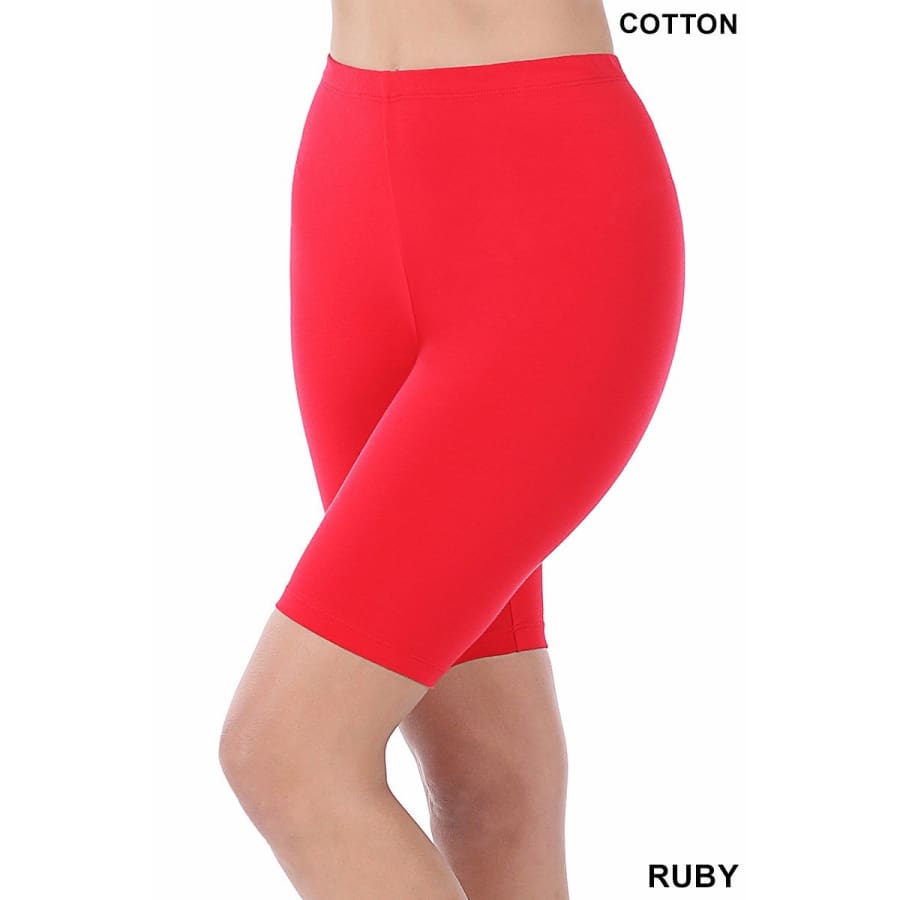
For a soft everyday basic, our cotton bike shorts are a simple way to test how your skin responds. If you prefer a top, the cotton slogan tee is another easy cotton option.
Watch out: "Easy-care" cotton often carries a resin finish that feels crisp rather than soft. If a label promises wrinkle-free, check the fibre content before you buy.
2. Linen: Breathable and Cool Against Irritable Skin
Linen is the coolest of the natural fabrics because its loose weave lets air move freely and its fibres wick moisture away from skin. That makes it a strong pick for hot days and for anyone who overheats easily.
Fresh linen feels crisp rather than buttery. It softens with every wash, so the first wear is not the best one. Blends with cotton give you more drape from day one.
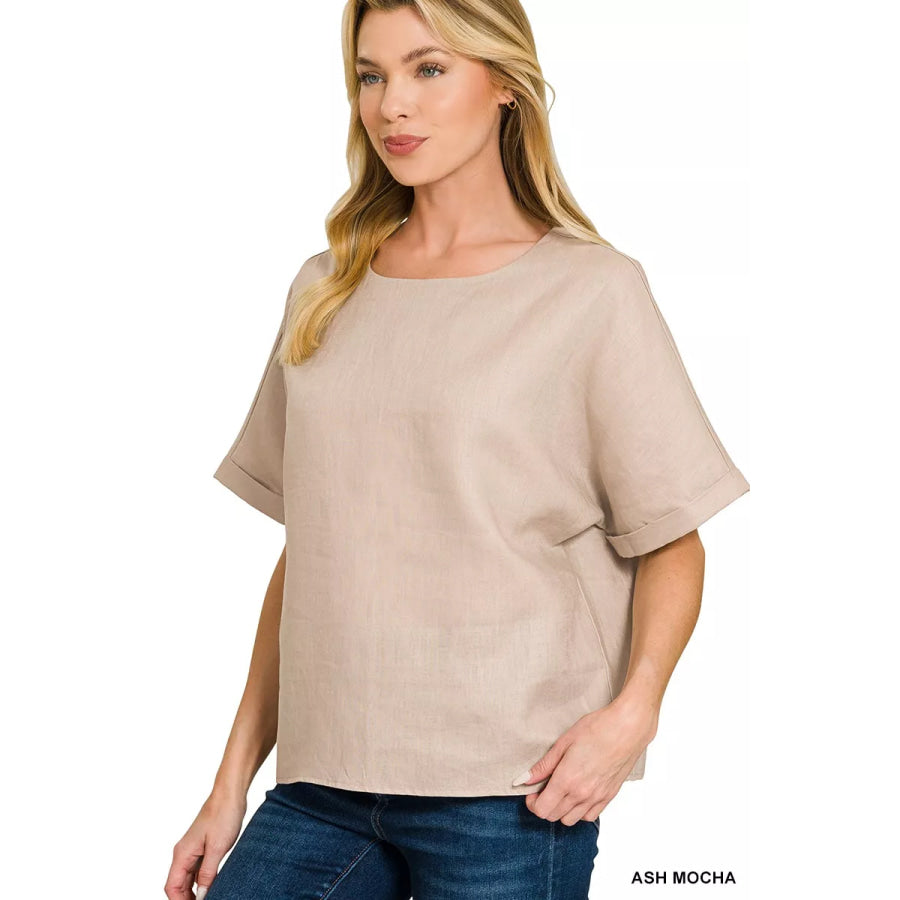
You can browse a pure linen top or a linen-blend pant to see how the fabric behaves in real garments. Both wash cold and tumble dry low.
Best for: warm weather, hot sleepers and anyone prone to heat rash. Skip if: you want a fabric that feels soft straight out of the bag.
3. Lyocell and TENCEL: Smooth Plant-Based Fibres With a Caveat
Lyocell is a regenerated plant-based fibre made from wood pulp in a closed-loop process, and it feels noticeably smoother than cotton. TENCEL is a brand name for lyocell produced to a specific standard.
The caveat is honesty about what it is. Lyocell is plant-based but not natural in the way cotton is, because the pulp is dissolved and reformed. It is gentle and drapes beautifully, yet it can pill if washed roughly.
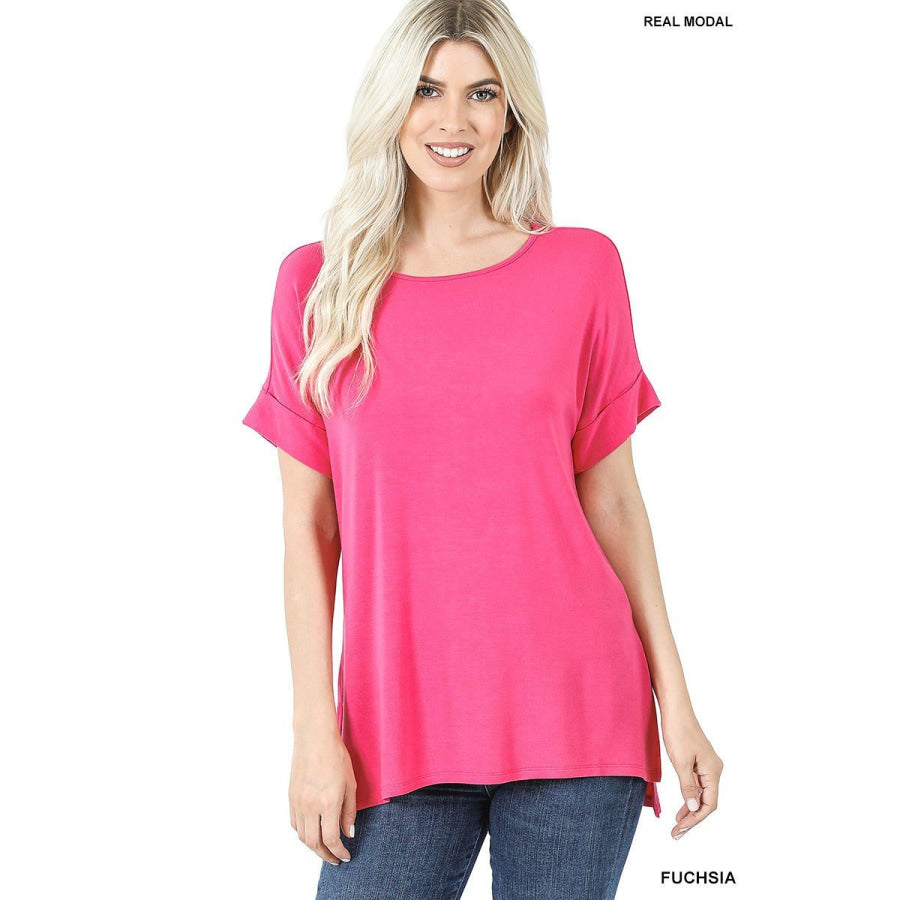
Modal sits in the same family and feels similarly soft. Our modal-blend boat neck top shows how smooth these fibres feel against skin.
Watch out: Lyocell loses strength when wet. Use a cold, gentle cycle and skip the dryer on high heat.
4. Silk: Softness That Comes With High Maintenance
The trade-off is care. Silk usually needs hand washing or a delicate cycle, and it marks easily. For most people, it works best as a sleep or layering piece rather than an everyday staple.
5. Hemp: Durable and Breathable, but Not the Softest Start
Hemp is one of the most durable natural fibres and it breathes much like linen. It also softens over time and holds its shape through repeated washing.
Zenana Linen Round Neck Cuffed Sleeve Top →
The downside is the beginning. New hemp feels rougher than cotton or linen, so it is rarely the first choice for very reactive skin. Blended with cotton, it becomes far more wearable.
Best for: long-lasting everyday pieces once broken in. Skip if: your skin reacts to texture and you want softness immediately.
Cotton vs Linen for Sensitive Skin: Which Wins
Cotton wins for most people because it is softer from the first wear and easier to find in pure form. Linen wins on airflow and cooling, which matters more in heat.
Fabric |
Feel |
Breathability |
Care |
Best For |
|---|---|---|---|---|
Cotton |
Soft |
Good |
Easy |
Everyday wear |
Linen |
Crisp, softens |
Excellent |
Easy |
Hot weather |
Lyocell |
Very smooth |
Good |
Gentle cycle |
Draping layers |
Silk |
Smoothest |
Moderate |
Hand wash |
Sleepwear |
Hemp |
Rougher at first |
Excellent |
Easy |
Durability |
If you overheat easily, choose linen. If your skin reacts to friction, choose cotton.
Is Bamboo Fabric Good for Sensitive Skin?
"Bamboo" on a label tells you very little. Most bamboo clothing is viscose, a regenerated fibre made with a chemical process, not a natural fabric in the way cotton is.
Bamboo viscose feels smooth and breathes reasonably well.
Our advice: treat bamboo as a soft regenerated fibre, not a guaranteed natural one. Check the label for "bamboo viscose" and wash it gently.
How to Wash Clothes for Sensitive Skin
Washing matters as much as the fibre. Residue from detergent, softener and optical brighteners can be a cause of irritation, and the way a garment is constructed can trap those residues against skin.
Start with the garment, not the machine. Look at the seams, labels and trims before you wash. Overlocked seams, stiff woven labels and plastic-based prints can rub regardless of fibre. Cut out scratchy labels where possible, and turn garments inside out so the smooth face of the fabric sits against your skin.
Choose the right detergent. Fragrance-free, dye-free liquid detergents are the safest default. Powder detergents can leave undissolved granules in the weave, especially in cold washes, so liquid or pods are usually easier on reactive skin. Avoid detergents with optical brighteners, which are designed to remain on the fabric after rinsing.
Skip fabric softener and dryer sheets entirely. They work by coating fibres with a waxy film, which is exactly the kind of residue that can trigger contact dermatitis.
Use an extra rinse cycle. Most machines offer a rinse-plus or extra-rinse setting, which can help clear detergent from garments worn against skin.
Match water temperature to fibre. Cotton and linen can be washed warm and tumble dried on low. Lyocell and modal should be washed cold on a gentle cycle and dried on low or hung, high heat weakens the fibre and encourages pilling. Silk needs hand washing or a delicate cycle with a pH-neutral wash, and should never go in a hot dryer.
Watch out: Overloading the machine leaves detergent trapped in the weave and prevents proper rinsing. Wash smaller loads, and let garments dry fully before wearing, damp folds can harbour mould and mildew, which are irritants in their own right.
Wash new garments before the first wear. This removes sizing agents, formaldehyde-based finishes and dye residue left over from manufacturing. It is especially important for dark dyes and anything labelled 'easy-care' or 'wrinkle-free', which often carries a resin finish.
Consider the dye, not just the fibre. Dark and saturated colours use more dye, and some reactive dyes can irritate very sensitive skin. If you react to a garment despite the fibre being suitable, try the same style in a lighter colour before giving up on the fabric.
Build a laundry routine, not a one-off fix.
The Bottom Line
Fabric choice is the part of sensitive-skin dressing you fully control. Cotton is the safest everyday baseline, linen is the coolest, lyocell and modal are the smoothest plant-based options, silk is the softest but fussiest, and hemp is the most durable once broken in.
At Sandee Rain Boutique, our range is built around soft, comfortable fabrics in inclusive sizes, backed by 813 reviews and a 96% positive rating. Explore our linen and cotton collection and find the pieces that feel right against your skin.
Frequently Asked Questions
What is the best natural fabric for sensitive skin?
Cotton is the safest starting point for most people with sensitive skin. It is breathable, absorbs moisture well and is widely available in soft weaves such as double gauze. Linen and lyocell are strong alternatives for warm weather, while silk suits sleepwear for some people. Patch-test any new fabric on a small area first.
Is cotton or linen better for sensitive skin?
Both are plant-based and breathable, so the better choice depends on how you wear them. Cotton works year-round and is a common pick for daily basics. Linen is a breathable option for warm weather, though it can feel rougher when new. For irritation-prone skin, start with cotton next to the skin and use linen for loose layers rather than fitted pieces.
Is bamboo fabric good for sensitive skin?
The fabric sold as bamboo is often viscose or rayon made through a chemical process. Softness can vary between brands. If you want to try it, choose loose-fitting pieces, wash before first wear to remove chemical finishes, and watch for irritation. Cotton and lyocell are more predictable choices if your skin reacts easily.
Can natural fabrics still irritate sensitive skin?
Yes. Natural does not automatically mean gentle. Wool is a natural fibre, and rough weaves, heavy dyes, chemical finishes and tight construction can cause friction for some people. Check the label for fibre content, wash new garments before wearing, and favour soft weaves and loose fits. If a fabric feels scratchy on your forearm, it will likely feel worse on your torso.
How should you wash clothes for sensitive skin?
Wash new garments before the first wear. Use a fragrance-free, dye-free detergent and skip fabric softener. Wash cotton, linen and lyocell in cold water on a gentle cycle, and tumble dry on low or line dry. For silk, follow the care label, which often means hand washing or a delicate cycle. Keep detergent doses small; more soap does not mean cleaner clothes, just more residue against your skin.
Your skin deserves clothing that works with it, not against it. Start with one cotton or linen piece, wash it gently, and see how your skin responds before building out your wardrobe.




Laisser un commentaire