

Table of Contents
- What Makes Loungewear Truly Comfortable
- Fabric Choices for Maximum Softness and Durability
- Fleece Lined Leggings and Winter Loungewear
- Fit and Sizing for All Body Types
- How to Wash Delicate Loungewear and Maintain Softness
- Loungewear Sets vs Individual Pieces
- Versatile Loungewear for Work-from-Home and Day-to-Night
- Sustainable and Ethical Loungewear Options
- Frequently Asked Questions
Last Updated: October 6, 2026
What Makes Loungewear Truly Comfortable
Comfortable loungewear isn't just about soft fabric, it's about fit, wash performance, and whether it feels as good on day 50 as day one.

Rose Christmas Tree Print V Neck Tee and Pants Lounge Set
The best loungewear balances softness with longevity. Many people buy a cosy piece only to watch it pill, shrink, or lose shape within weeks. True comfort means reaching for the same pieces month after month because they still feel buttery-soft.
Fabric Choices for Maximum Softness and Durability
Fabric determines whether loungewear feels cosy or scratchy, breathes or traps heat, and survives ten washes or a hundred.
Natural Fibres vs Synthetic Blends
Natural fibres like cotton, linen, and bamboo-derived fabrics (like Tencel) offer genuine breathability and temperature regulation. Cotton is soft and forgiving; linen breathes well but wrinkles; bamboo is silky and moisture-wicking, ideal for warm climates or anyone who sleeps hot.
Synthetic blends, particularly polyester-spandex, deliver stretch and durability natural fibres can't match. A 95% polyester and 5% spandex blend (like our Zenana Elastic Waist Comfy Lounge Pants at $63.00) gives you recovery after washing, shape retention, and pilling resistance pure cotton struggles with.
The real comfort comes from blends that respect both sides. A 86% polyester, 12% cotton, and 2% spandex mix, like our Zenana Quilted Button Up Long Sleeve Top and Pants Lounge Set at $147.00, gives you the softness of cotton with the durability and stretch of synthetics.

Temperature-Regulating and Breathable Options
Not all soft fabrics breathe equally. Rayon blends (like our Zenana Smocked Waistband Wide Leg Lounge Pants at $82.00, made from 96% rayon and 4% spandex) offer a silky feel with genuine breathability, wicking moisture away from your skin.
Lightweight polyester blends work year-round, they don't trap heat like fleece but are warmer than linen, covering more ground than a single-season fabric.
Fabric Type |
Breathability |
Temperature Best For |
Durability |
Maintenance |
|---|---|---|---|---|
Cotton |
High |
All seasons |
Moderate |
Easy, machine wash |
Rayon blend |
High |
Warm weather |
Moderate |
Easy, machine wash |
Polyester blend |
Moderate |
All seasons |
High |
Very easy, durable |
Fleece |
Low |
Winter |
High |
Easy but warm only |
Linen |
Very high |
Warm weather |
Moderate |
Easy but wrinkles |
Fleece Lined Leggings and Winter Loungewear
Winter loungewear demands a different approach. Fleece lined leggings provide warmth without bulk, the key is finding fleece that doesn't pill or shed.
Quality fleece has a dense pile that resists breakdown; cheaper fleece sheds fuzz after a few washes.
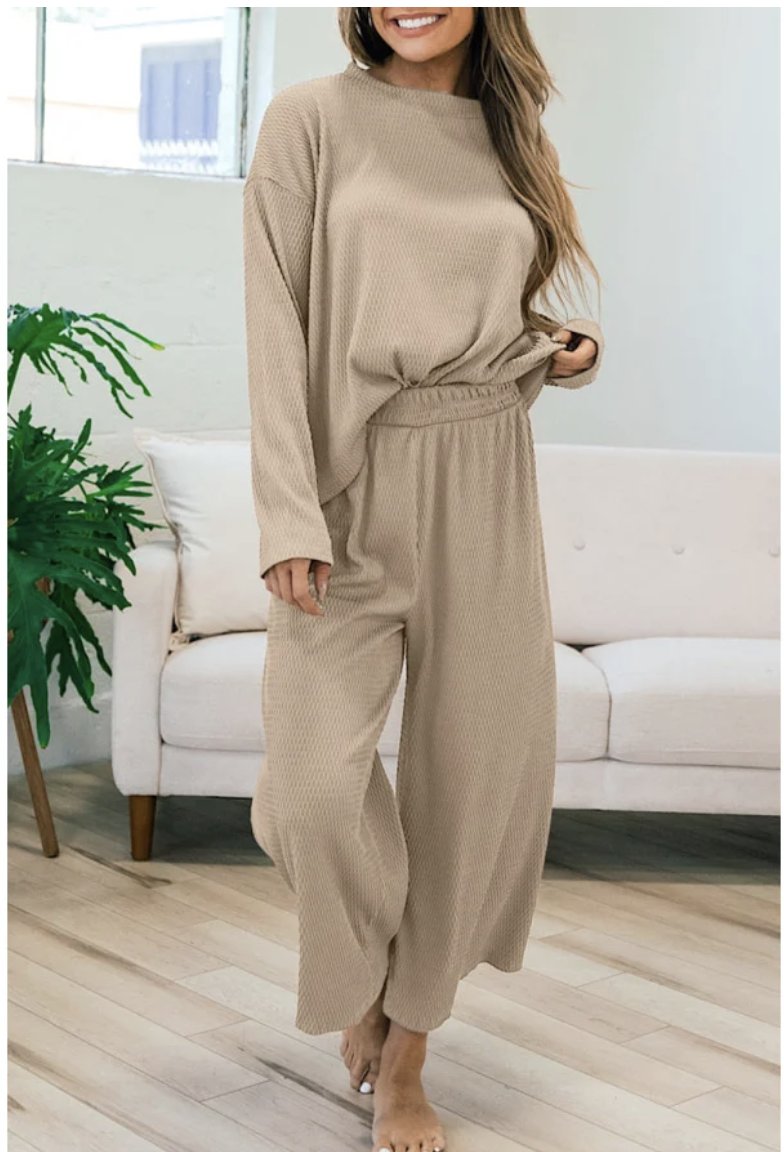
For winter sets, layering pieces work better than single heavy items. Our Smoke Gray Loose Textured Pullover and Pants Outfit at $85.00 combines a textured knit with an elastic waistband that works across seasons without overheating you indoors.
Fit and Sizing for All Body Types
Comfort is meaningless if the garment doesn't fit your actual body.
Real size-inclusive design accounts for how bodies change across sizes: bust-to-hip ratios aren't proportional, waist placement shifts, and sleeve length doesn't scale linearly.
Look for brands publishing detailed size charts with actual measurements, not just "S, M, L, XL" labels.
An elastic waistband is non-negotiable for loungewear, snug enough to stay in place but never digging in. Our Pink Short Sleeve Placket Shell Button Elastic Waist Lounge Set at $95.00 holds its shape without constricting.

Sleeve length matters more than people realise: too-short sleeves ride up, too-long sleeves bunch at the wrist.
How to Wash Delicate Loungewear and Maintain Softness
Washing habits determine whether your loungewear stays soft or becomes stiff and worn.
Machine wash cold on a gentle cycle.
Skip fabric softener entirely.
Tumble dry low or air dry. High heat weakens elastic, fades colours, and causes synthetic blends to pill.
Never use chlorine bleach, it yellows light colours and degrades elastic. Treat stains with oxygen-based remover and wash immediately.
Loungewear Sets vs Individual Pieces
Most guides frame this as a style question. It's really a construction and care question, and for two groups most guides ignore, an accessibility question.
What a set actually buys you
A coordinated set means both pieces share the same fabric, dye lot, and wash behaviour. Cut from the same bolt, they shrink, fade, and pill on the same timeline. Mismatched pieces, a delicate rayon top with a heavy cotton-blend bottom, create inconsistent care requirements, and one usually wears out first, leaving an orphan.
Sets also tend to be priced better than buying pieces separately, and they remove decision fatigue: two pieces, one grab, done.
What separates buy you
Individual pieces let you dial in the variables that actually affect comfort:
Rose Christmas Tree Print V Neck Tee and Pants Lounge Set →
- Waistband style, elastic, drawstring, smocked, or flat-front. If you have a sensitive midsection, this is the single most important choice.
- Sleeve length, a too-short sleeve rides up; a too-long sleeve bunches at the wrist. Separates let you match sleeve length to your arm.
- Inseam, the difference between a 68 cm and a 78 cm inseam is the difference between a cropped look and a floor-skimming one. Sets rarely offer both.
The gap most guides miss: sensory-friendly construction
For anyone with sensory sensitivities, common among autistic and ADHD adults, and people with eczema, fibromyalgia, or post-surgical tenderness, construction matters more than set-versus-separates. What matters is:
- Tagless or tear-away labels. A scratchy neck tag can ruin an otherwise perfect garment. If a piece has a sewn-in tag, check whether it can be removed cleanly without leaving a stiff residue.
- Flat seams and no exposed elastic. Raised seams, rough overlocking, and rigid waistbands are the most common sensory complaints. Flatlock or bonded seams sit flush against skin.
- Consistent texture. Prints applied as a thick rubberised layer feel different from the base fabric and can be a dealbreaker. Look for water-based or discharge prints, or solid colours.
A practical test: turn the garment inside out before buying. If the inner surface feels rougher than the outer, or you can feel raised stitching down the side seam, it will likely irritate sensitive skin over a full day.
The other gap: pet-hair resistance
If you share a home with a dog or cat, fabric choice determines whether your loungewear looks clean for five minutes or five hours. Pet hair clings hardest to:
- Fleece and brushed knits, the raised pile acts like Velcro.
- High-static synthetics, polyester and nylon attract hair through static charge.
- Dark, solid colours, every light hair shows.
Hair releases most easily from:
- Tightly woven, smooth-surfaced fabrics, linen, tightly knit cotton, and smooth rayon blends.
- Heathered or mid-tone colours, grey, oatmeal, and melange patterns camouflage hair far better than black or white.
- Lower-static blends, a small cotton or rayon content reduces the static that pulls hair in.
A rubber-bristled brush or damp rubber glove removes most embedded hair without damaging fabric, far better than a lint roller on knits.
How to build a collection that actually works
Start with one complete set in a neutral, heathered, or mid-tone colour, it hides pet hair, transitions to video calls, and gives you a baseline.
Check fabric composition on both pieces before buying a set. If the top is a delicate knit and the bottom a heavy blend, you'll care for them differently and replace them at different times.
Versatile Loungewear for Work-from-Home and Day-to-Night
The best loungewear doesn't announce itself, intentional enough for a video call or quick errand, yet as relaxed as actual loungewear.
Neutral colours (black, grey, cream, charcoal) transition anywhere without looking like you just rolled out of bed; patterns are more forgiving of wrinkles. Our Zenana Soft Melange Short Sleeve Tee & Long Pants Set at $111.00 in soft heathered grey hits that sweet spot: casual enough for home, polished enough for video meetings.

Avoid overly baggy silhouettes for day-to-night versatility. A relaxed fit is comfortable; a shapeless fit looks sloppy on camera.
Layering pieces expand versatility: a tee becomes work-appropriate with a cardigan or structured overshirt; a matching set becomes evening-ready with a blazer.
Sustainable and Ethical Loungewear Options
Most guides treat sustainability as a vibe. In practice it comes down to three measurable things: the fibre, how the garment was made, and how long it lasts in your drawer. If you can't get a straight answer on any of those, the 'ethical' label is decoration.
Fibre-level trade-offs you can actually compare
Every fibre carries a different environmental cost, and none is a clean win. The honest comparison:
- Conventional cotton is soft, breathable, and biodegradable, but it is a thirsty crop and typically grown with heavy pesticide inputs. It also shrinks and pills more readily than blends.
- Organic cotton removes the synthetic pesticide load and is usually grown with less water, but it costs more and still requires significant irrigation. Look for certification marks rather than marketing copy.
- Linen (flax) needs comparatively little water and few inputs, and it gets softer with every wash, one of the few fibres that genuinely improves with age. It wrinkles, which is the trade-off.
A common pattern among people who care about this: prioritise natural or cellulosic fibres against the skin, and accept 2-5% elastane because without it, waistbands and cuffs lose recovery within months. That tiny synthetic fraction is often the difference between keeping a garment two years and replacing it twice a year.
Certifications worth checking
Rather than trusting a brand's own sustainability page, look for third-party marks on the care label or listing:
- Global Organic Textile Standard (GOTS), covers organic fibre content plus processing and social criteria.
- OEKO-TEX Standard 100, tests the finished fabric for harmful substances, which matters most for anything worn against skin.
- Responsible Wool Standard and Global Recycled Standard (GRS), relevant if the piece uses wool or recycled synthetics.
If a product page says 'eco-friendly' with no certification and no fibre breakdown, treat it as marketing, not a verified claim.
Durability is the most underrated ethical choice
The biggest environmental lever in loungewear is how many times you wear a piece before it fails. The ethical question isn't only 'what is it made of' but 'will it still be comfortable in year two'.
Practical markers of a garment built to last:
- Reinforced seams at the crotch, underarm, and waistband, the three points that fail first.
- Coverstitched or flatlock hems rather than single-stitch, which unravels.
- A waistband with a defined elastic core rather than a folded-over fabric tube, which twists and loses tension.
Care as a sustainability practice
How you wash matters as much as what you buy. Cold water, a gentle cycle, and air drying reduce energy use and fibre breakdown. Skipping fabric softener keeps breathability intact. Washing less often, two to three wears between cycles, extends garment life more than any single purchase decision.
At Sandee Rain Boutique, we prioritise ethically made, cruelty-free products that don't compromise on quality or comfort. Our collections are thoughtfully designed with sustainable practices in mind, so what feels good also aligns with responsible production.
Frequently Asked Questions
What fabrics make the most comfortable loungewear?
The softest and most durable loungewear combines natural fibres with a small amount of stretch. Cotton, bamboo, linen, and rayon are breathable and gentle on skin. Blends like 95% polyester with 5% spandex offer softness and elasticity without pilling. Look for fabrics described as buttery-soft and pill-resistant to maintain comfort through multiple washes.
How do I prevent fleece lined leggings from losing softness after washing?
Wash fleece lined leggings inside-out in cold water on a gentle cycle. Use mild detergent and avoid fabric softener, which can damage fibres. Tumble dry on low heat or air dry flat. Never use high heat or bleach. Turning them inside-out protects the fleece surface from friction, keeping the lining soft and cosy for longer.
Can loungewear be worn as everyday casual clothing?
Yes, modern loungewear is designed to transition seamlessly from home to errands. Pieces like coordinated sets, wide-leg pants, and soft pullovers look chic enough for casual outings. Choose neutral colours, quality fabrics, and well-fitted silhouettes to elevate the look. Pair loungewear with simple accessories for a put-together appearance that's still comfortable.
What's the difference between loungewear and pyjamas?
Loungewear is designed for relaxation and casual wear throughout the day, with styles that work for both home and light outdoor activities. Pyjamas are specifically made for sleeping, often with shorter inseams and looser fits. Loungewear fabrics tend to be more durable and pill-resistant, while pyjamas prioritise breathability for sleep. Many pieces blur the line, serving both purposes well.


Dejar un comentario