



Table of Contents
- Why Breathable Fabrics Matter for Summer Travel
- How Breathable Fabrics Keep You Cool
- Best Moisture-Wicking Fabrics for Travel
- Natural vs Synthetic Fabrics for Hot Weather
- Choosing Comfortable Travel Outfits for Women
- Skin Health and Breathability
- Fabric Care for Travel Durability
- Odour Management with Breathable Fabrics
- Frequently Asked Questions
Last Updated: September 30, 2026
Why Breathable Fabrics Matter for Summer Travel
When choosing breathable fabrics summer travel pieces, you're not just prioritizing comfort, you're ensuring you arrive refreshed and ready to explore. At Sandee Rain Boutique, we've curated pieces that prioritize breathability and ease of movement, because travel demands clothing that works as hard as you do.
Breathable fabrics solve the style-versus-function dilemma by allowing air circulation and moisture to escape, keeping your body temperature regulated and your clothing fresh throughout the day.
Breathability depends on fiber type, weave structure, and weight. Understanding these differences helps you build a travel wardrobe that actually performs.
How Breathable Fabrics Keep You Cool
Breathable fabrics work through two key mechanisms: moisture-wicking and air circulation, which together create a cooler microclimate around your skin.
Moisture-wicking and evaporation
Moisture-wicking fabrics pull perspiration away from your skin and spread it across a wider surface area, allowing faster evaporation, unlike absorbent fabrics that hold sweat against your skin. This becomes essential in humid climates and during long transit.
Top moisture-wicking fabrics include merino wool blends, synthetic performance materials, and cotton-linen combinations. The faster evaporation occurs, the cooler you feel.
Air circulation and heat dissipation
Air circulation refers to how easily air flows through fabric. Loosely woven fabrics allow air to move freely, dissipating body heat and preventing that sticky, overheated feeling.
Weave structure determines breathability as much as fiber type. Fabrics like linen have open weaves that create natural ventilation channels, allowing your body's cooling system to work effectively.
Best Moisture-Wicking Fabrics for Travel
Linen and cotton blends
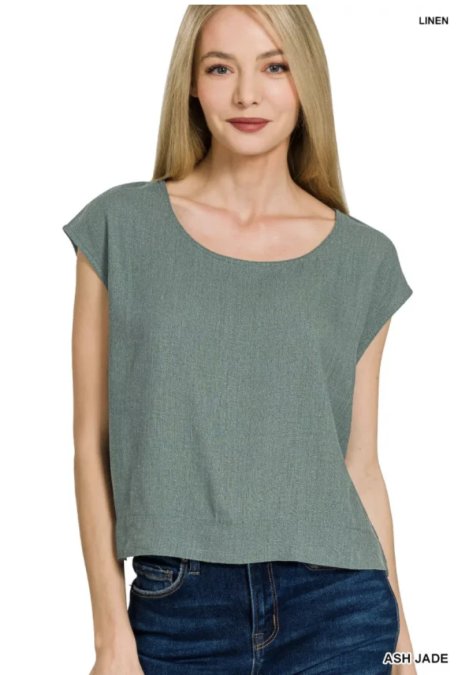
Linen is the gold standard for hot-weather travel, lightweight, breathable, and stylish. Pure linen wrinkles easily, but linen-rayon blends maintain breathability with easier care. The Zenana Linen Sleeveless Top (20% linen, 80% rayon) offers this balance perfectly for layering or solo wear.
Cotton is breathable but absorbs rather than wicks moisture. Choose lightweight cotton or cotton-blend pieces that dry quickly and pack small.
Merino wool and silk
Fine merino wool is remarkably breathable and temperature-regulating. It wicks moisture, resists odour, and packs small, ideal for minimalist travel wardrobes.
Silk is breathable and feels cool against skin, but requires careful handling. For special occasions or layering, it adds sophistication without weight.
Synthetic performance fabrics
Synthetic fabrics engineered for moisture-wicking outperform natural fibres in durability and quick-dry properties, ideal for hand-washing in hotel sinks. The Zenana Oversized Slub Hacci Top combines polyester, rayon, and spandex for breathability and stretch.
Natural vs Synthetic Fabrics for Hot Weather
Pros and cons of natural fibres
Pros: Naturally breathable, hypoallergenic, temperature-regulating, biodegradable, soft. Cons: Require careful washing, may shrink, more expensive, some absorb rather than wick moisture, heavier than engineered synthetics.
Advantages of synthetic blends
Synthetic blends dry faster, resist wrinkles, and maintain shape through multiple wears. They're engineered for superior moisture-wicking, more affordable, and require less specialized care.
Modern blends combining natural and synthetic fibres offer a middle ground. The Umgee Linen V-Neck Lace Puff Sleeve Top (55% linen, 45% cotton) provides natural-fibre breathability with improved wrinkle resistance.
Choosing Comfortable Travel Outfits for Women
Build a travel wardrobe with breathable fabrics summer travel options that balance packability, wrinkle resistance, and durability based on your destination and trip length.
Layering strategies for temperature changes
Travel means moving between air-conditioned spaces and warm outdoor areas. Breathable layering lets you adjust without carrying heavy jackets.
Base layer: Start with a lightweight, moisture-wicking tank in merino wool or synthetic performance fabric. Merino wool resists odour, allowing 3-4 wears before washing.
Mid-layer: Add a loose linen or linen-blend shirt for sun protection and warmth. The loose fit allows air circulation without bulk.
Outer layer: Pack a lightweight rayon cardigan instead of a jacket. Rayon compresses well and adds warmth without weight.
Pair fitted base layers with loose mid-layers to avoid uncomfortable compression.
Fabric selection by climate and activity
Tropical and humid climates: Prioritize synthetic performance blends and pure linen for aggressive moisture-wicking. Linen-blend pieces balance breathability with wrinkle resistance. Fine merino wool is ideal if you'll move between air-conditioned and outdoor spaces repeatedly.
Moderate climates (15-25°C): Cotton-linen blends and merino wool offer balanced breathability without excessive moisture-wicking.
Cool climates with variable conditions: Merino wool layers are your best option. Layer a merino base under a merino mid-weight sweater for natural temperature regulation.
Fabric weight and packability
Fabrics under 150 gsm pack smaller and breathe better. Lightweight (100-150 gsm) offers the best balance for most travel, packing small while maintaining shape and breathability.
Wrinkle resistance vs. breathability trade-offs
High breathability, moderate wrinkles: Linen-rayon and linen-cotton blends maintain air circulation while reducing wrinkling, best for most travellers. Moderate breathability, low wrinkles: Synthetic blends resist wrinkles and dry quickly, ideal for extended travel with limited laundry facilities.
Building a minimal travel capsule
Build a minimal capsule: one linen dress, two merino tanks, one linen shirt, one lightweight cardigan. Pair with neutral bottoms for a complete carry-on wardrobe. Each piece should work with at least two others.

Umgee Linen V-Neck Lace Puff Sleeve Top
Skin Health and Breathability
Breathable fabrics directly impact skin health. When clothing doesn't allow air circulation, moisture accumulates, creating conditions for bacteria and fungi to thrive, leading to chafing and heat rashes.
Good air circulation and moisture-wicking maintain a drier microclimate, reducing friction and rash development. Natural fibres like cotton and linen are hypoallergenic for sensitive skin.
Textile porosity, the number of tiny holes in a fabric, determines air flow. High-porosity fabrics like linen have larger gaps, allowing better air flow than heavy cotton.
Fabric Care for Travel Durability
Breathable fabrics require intentional care to maintain their moisture-wicking and air-circulation properties, especially when you're washing clothes in hotel sinks or laundromats with limited water quality. Many travellers unknowingly damage breathability through improper washing, which undermines the entire benefit of choosing these fabrics in the first place.
How washing degrades breathability
The primary threat to breathable fabrics is detergent residue. Standard laundry detergents contain surfactants and polymers designed to lift dirt and oils from fabric fibres. When these chemicals aren't fully rinsed away, a common problem when hand-washing in hotel sinks with limited water, they accumulate in the fabric's weave structure and pores.
Travel-specific washing strategies
For hand-washing in hotel rooms: Use a gentle, residue-free detergent specifically formulated for technical or performance fabrics. Rinse thoroughly at least three times in cool water to remove all soap residue. Squeeze gently rather than wringing; excess pressure can compress the weave. For synthetic blends and merino wool, a final rinse in cool water with a small amount of white vinegar (roughly 1 tablespoon per litre) helps remove detergent buildup and restores breathability.
Extending wear between washes
Breathable fabrics naturally resist odour accumulation because they don't trap moisture, so you can wear them multiple times before washing. Air your clothes between wears by hanging them in your hotel room or outside your accommodation. Even 4-6 hours of air exposure allows residual moisture to evaporate and odours to dissipate, extending the garment's wearability.
Storage during travel
Packing clothes in breathable garment bags or cotton packing cubes prevents moisture accumulation during travel. Plastic bags trap humidity, which creates an environment where bacteria thrive and odours develop, exactly the opposite of what breathable fabrics are designed to prevent. Breathable fabric storage allows air circulation even when clothes are packed tightly, maintaining freshness throughout your journey.
Odour Management with Breathable Fabrics
One of the biggest advantages of breathable fabrics is their natural resistance to odour development. When moisture doesn't accumulate against your skin, bacteria have less favourable conditions to multiply. This means you can wear breathable pieces multiple times between washes, a crucial benefit when you're packing light.
Frequently Asked Questions
What are the most breathable fabrics for hot weather?
Linen, cotton, merino wool and silk are among the most breathable natural fibres. Linen offers exceptional air circulation through its open weave structure, while cotton provides moisture-wicking properties. Merino wool regulates temperature effectively despite being wool, and silk creates a smooth skin-to-fabric interface that reduces friction. Synthetic performance fabrics like polyester blends also offer excellent moisture-wicking for travel when you need quick-dry capabilities.
Why is moisture-wicking fabric important for travel?
Moisture-wicking fabrics pull perspiration away from your skin and allow it to evaporate quickly, keeping you dry and comfortable during long journeys. This prevents the clammy, uncomfortable feeling that traps heat and creates a micro-climate against your body. Quick-dry fabrics are especially valuable on flights where air circulation is limited and on warm-weather trips where you'll be moving between different environments. Staying dry also reduces the risk of skin irritation and odour development.
Are natural fibres better than synthetic for summer travel?
Natural fibres like linen and cotton excel at breathability and skin comfort, offering hypoallergenic properties and excellent air circulation. However, synthetic blends often outperform pure natural fabrics for travel because they dry faster, resist wrinkles better and maintain their shape through packing. The best choice depends on your priorities: choose natural fibres if comfort and skin health are paramount, or synthetic blends if you need durable, low-maintenance pieces that pack efficiently and require minimal care during travel.
How can I stay comfortable on long-haul flights?
Wear loose-fitting, breathable clothing in natural fibres or moisture-wicking synthetics to maintain airflow around your body. Layer lightweight pieces so you can adjust to cabin temperature changes. Choose fabrics with high textile porosity and open weave patterns that allow air circulation. Avoid heavy, tight-fitting garments that restrict movement and trap heat. Consider merino wool or silk blends that regulate temperature naturally. Prioritise comfort index when selecting travel pieces, and ensure your outfit allows for easy movement during the flight.


Dejar un comentario